You have the collection. You have the fabrics in mind. But the manufacturer wants a minimum quantity that's far beyond what your brand actually needs: 1,000 units per style when you need 50. What do you do?
For most independent luxury womenswear brands, this is the exact moment a good collection stalls. Not because the design isn't ready. Not because the market isn't there. But because the traditional manufacturing model was built for volume, not for the tightly edited, limited-run collections that define how luxury brands actually launch and test ideas today.
A capsule collection, produced with a flexible MOQ rather than a fixed, high-volume minimum, is a smarter production model for exactly this stage of a brand's growth. Here's how it actually works, from fabric selection through to deciding when to scale.
What Is a Luxury Capsule Collection?
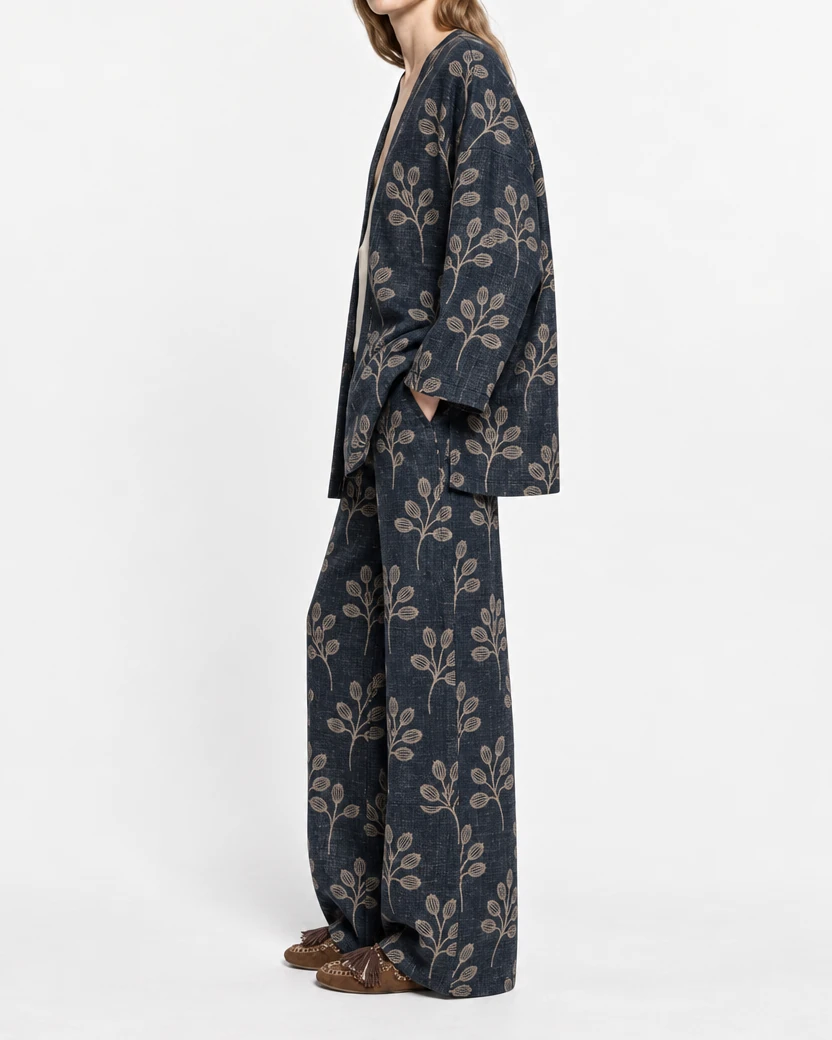
A capsule collection is a small, tightly edited collection built around a limited number of styles, often somewhere between 4 and 12 pieces, designed to work together as a cohesive, wearable system rather than a sprawling seasonal line. For a luxury womenswear brand, this usually means fewer silhouettes, executed with more intention: better fabric, more considered construction, a clearer point of view.
Capsules aren't a compromise. Some of the most commercially successful luxury launches of the last decade started as capsules: a way to test a concept, a fabric story, or a new customer before committing real capital to scale.
Why Traditional Manufacturers Often Require High MOQs
Minimum order quantities aren't arbitrary. They exist because of real fixed costs on the production side: a loom has to be set up and run for a minimum length before dyeing and finishing become cost-efficient, cutting a pattern for 50 units costs nearly the same in labor as cutting it for 500, and a factory's own scheduling and efficiency depend on batching similar jobs together.
For a mill or a large-scale cut-and-sew factory, a small order simply isn't worth the setup cost relative to the revenue, so the MOQ gets set high enough to make it worthwhile for them, not necessarily for you. That's the real reason most "standard" manufacturing MOQs start in the hundreds or thousands of units, regardless of what your brand actually needs.
How Flexible MOQs Make Smaller Luxury Collections Possible
A flexible MOQ model works differently: instead of a fixed number set by the factory's own efficiency targets, the minimum is worked around the actual fabric, the actual collection, and the actual stage your brand is at. At VD Textile Studio, for example, most of our fabrics carry a standard reference MOQ of around 500 meters, but that number flexes based on warp availability and what's actually being developed. It's a starting point for a conversation, not a wall.
This matters because "flexible" and "low" aren't the same thing. A low-MOQ manufacturer often means lower quality, less attention, or fabrics chosen for availability rather than fit. A flexible-MOQ manufacturer means the quantity is negotiated around your collection: the fabric, the development timeline, and the production plan all shape the number together, rather than the number dictating what you're allowed to make.
How to Choose Fabrics for a Capsule Collection
Fabric choice carries more weight in a capsule than in a larger seasonal collection, because there's no room to hide a weak textile behind sheer volume of styles. Every piece has to earn its place. A few things worth weighing early:
- Composition and hand-feel first, trend second. A capsule is meant to last past one season's cycle, so a fabric chosen purely for a trending print or color often ages faster than the collection itself.
- Weight and drape relative to the silhouette. A structured capsule (blazers, tailored separates) needs body and memory in the cloth, like a jacquard or a substantial twill. A fluid capsule (slip dresses, draped tops) needs a fabric that moves, like a crepe or a lighter viscose blend.
- Consistency across styles. Choosing 2 to 3 fabrics that can each do multiple jobs across the collection (a jacquard for structure, a complementary solid for ease) keeps a small capsule feeling intentional rather than scattered.
- Real technical specs and test data, not just a swatch photo. Composition, weight (g/m²), and width all affect yield calculations and cost. A good manufacturer will give you these numbers upfront. For a luxury collection, also ask for lab test reports: colorfastness, pilling resistance, tensile and tear strength, and relevant compliance certifications (OEKO-TEX, GOTS, REACH). These aren't formalities. They're what protects you if a retailer or a customer ever questions the quality or safety of what you're selling.
Every fabric in our library comes with full technical data sheets and compliance certification on request. See our Documentation & Certifications page for the full list.
How Many Styles Should a First Capsule Contain?
Most first capsules work best between 5 and 8 styles. Fewer than that and there often isn't enough range for a customer to build a full look from the collection; more than that, and the production and sampling workload starts to resemble a full seasonal line without the budget or lead time to match. A tight range of a dress, a blazer, a trouser, a blouse, and a slip layer gives a customer enough to mix and match while keeping fabric and sampling costs contained.
How Much Fabric Does a Small Capsule Collection Actually Require?
There's no single meterage that fits every capsule. It depends on your style count, garment types, and quantities per style. What matters more than hitting an exact number is working with a manufacturer built around flexibility from the start, rather than one that forces your small collection into a bulk-order system designed for someone else's volume.
At VD Textile Studio, our fabrics carry a reference MOQ of around 500 meters that flexes around warp availability and what you're actually developing. That means a small capsule collection gets treated as a real production run in its own right, not squeezed in as an exception, and not penalized with the inflated minimums a typical mill sets for its own efficiency, not yours.
When Should You Use Stock Fabrics vs. Custom-Developed Fabrics?
Stock fabrics, designs already in a manufacturer's catalogue and ready to sample and order, are the faster, lower-risk choice for a first capsule. There's no development lead time: the fabric already exists, tested and consistent, so you can see and touch the actual material immediately, with no development step required.
Custom-developed fabrics, meaning a bespoke colorway, a modified weight, or an entirely new construction, make sense once a brand has validated its concept and wants a signature textile that competitors can't simply source from the same mill. The timeline is longer, but you're never committing blind: before any production run, we develop a test run and send you hangers of the actual custom fabric to confirm color, hand-feel, and construction in person. Production only moves forward once you've approved what you're physically holding, not a digital rendering of it.
A practical middle path many brands use for a first capsule: build most of the collection on stock fabrics, and reserve one hero piece for a custom color or finish, enough to feel distinctive without taking on the full timeline and risk of an all-custom collection.
How to Plan Sampling Before Committing to Production
Sampling is where a capsule collection either gets de-risked or quietly falls apart. Before placing a production order:
- Request hangers (swatches) first. Never commit to a full fabric order based on a photo or a digital rendering alone. Color, hand-feel, and drape all shift in person.
- Make a first fit sample in your actual chosen fabric, not a substitute. A jacquard and a plain weave drape differently enough that a fit approved on one can fail on the other.
- Build in at least one round of revisions into your timeline. Almost no first sample is production-ready; budgeting the time for a second pass up front avoids a rushed, compromised final version.
- Confirm lead time in writing before sampling begins. A standard lead time (commonly around 4 weeks for fabric, separate from garment production time) should be clear before you commit a launch date to it.
When to Scale From a Capsule to Larger Production
The signal to scale isn't a calendar date. It's demand data. A capsule has done its job once you have real sell-through numbers, repeat customer interest, or wholesale orders that exceed what the capsule's flexible MOQ was built to cover. At that point, the conversation with your manufacturer shifts: the same fabric that started at a flexible 500-meter reference point can move to a larger committed order, often with better per-meter pricing as volume increases.
The brands that scale successfully are usually the ones that used their capsule deliberately, as a real test, not just a smaller version of a plan they'd already fully committed to. If the capsule sells, you scale the fabric and the production, not the entire planning process, because you've already done the hard part: proving the collection works.
Planning a small luxury womenswear collection?
We manufacture capsule collections with flexible MOQs, giving independent brands access to high-quality textiles and production without the volume requirements of traditional large-scale manufacturing.