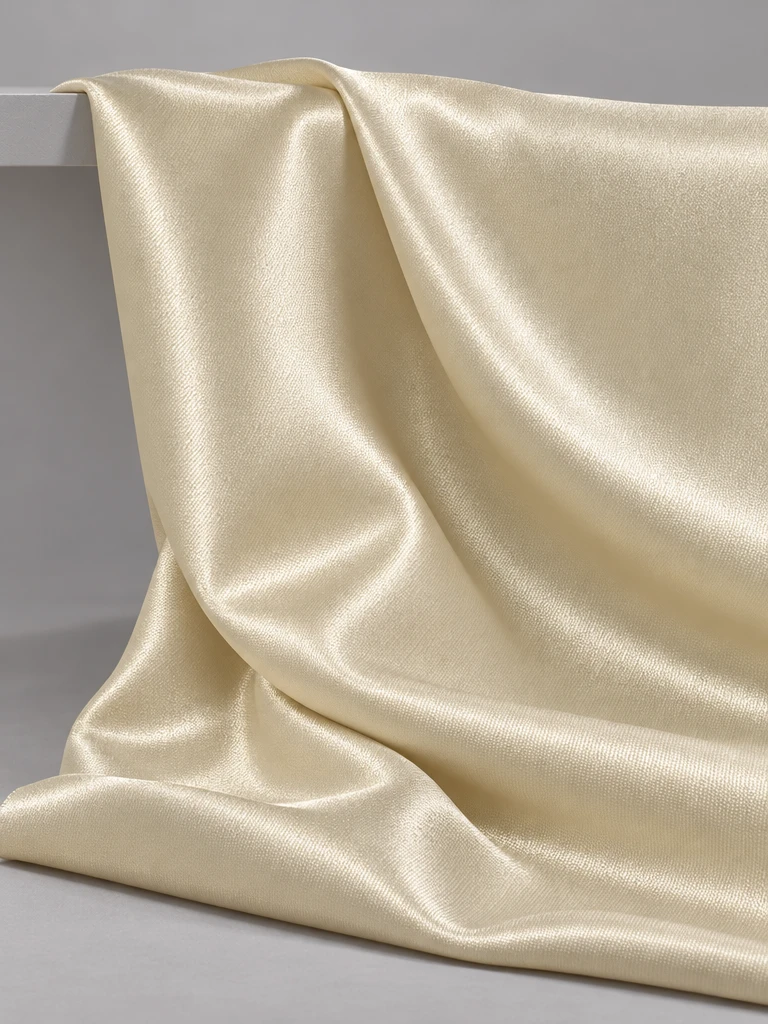
Choosing a fabric is not simply about finding something beautiful. The right fabric needs to support the silhouette, the drape, the hand-feel, the season, the price point, and the production requirements of the collection, all at once. Get it right and the fabric disappears into the design; you just see the garment. Get it wrong and no amount of pattern-cutting skill fully fixes it.
It's also one of the decisions founders and designers second-guess the most. Which fabrics should actually make it into the collection? How much should you order to start? And will this fabric still work once it's priced and sitting on a rail next to everything else? You can compare swatches for weeks and still end up back at the same questions. What follows isn't a shortcut around that uncertainty, it's a decision-making process designers and business owners can actually work through, fabric by fabric, until the answers are genuinely clear.
Start With the Garment, Not the Fabric
The most common mistake in fabric selection happens before anyone even looks at a swatch: starting from a fiber or a fabric name you already love, silk, jacquard, satin, rather than from what the garment actually needs to do. A beautiful fabric chosen for the wrong garment still produces a disappointing piece.
Before sourcing anything, answer a few questions about the garment itself: What is it? What silhouette are you building? Does it need to drape close to the body, or hold its own shape away from it? Is it meant to be fluid, sculptural, sheer, or textured? What season and market is it for? Only once those answers are clear does it make sense to start narrowing down fabric options, because the fabric exists to serve the silhouette, not the other way around.
How Fabric Weight Shapes Drape, Structure, and Hand-Feel
Fabric weight, measured in grams per square meter (g/m², often shortened to GSM), is one of the clearest signals of how a fabric will behave on the body: lighter weights lean toward fluid drape, heavier weights bring more structure and opacity.
What GSM doesn't tell you on its own is quality. A higher number isn't automatically a better fabric, it's simply denser. Two fabrics at the same weight can feel completely different depending on fiber, construction, and finishing, which is why weight should inform a decision, not make it by itself.
Drape vs. Structure: Choosing Fabric for the Silhouette
Once you know what the garment needs to do, the drape-vs-structure question gets much easier to answer. A few starting points, not rigid rules, since the same fiber can behave very differently depending on how it's constructed and finished:
| Desired result | Look for |
|---|---|
| Fluid, elegant dress | A soft, fluid construction, like a viscose blend or lightweight crepe |
| Structured blazer | A stable woven with body and memory, like a substantial jacquard or twill |
| Sculptural skirt | A fabric with enough structure to hold volume without a lining underneath |
| Soft blouse | A lightweight fabric with fluid drape and a soft hand-feel |
| Statement evening piece | Texture and drape together: a jacquard or sheer organza with real surface interest |
Composition Isn't the Whole Story
A composition line like "100% polyester" or "80% viscose, 20% polyester" tells you the fiber, but it doesn't tell you how the fabric will actually perform. Fiber is only one of several factors that together determine how a fabric moves, feels, and holds up:
- Fiber. Natural, synthetic, or a blend, each with its own baseline behavior around drape, breathability, and sheen.
- Weave or knit. A plain weave, a satin weave, a jacquard, or a knit construction will all behave differently even in the identical fiber content.
- Yarn. A lustrous filament yarn (what a composition sheet often lists as FLOS, short for floss) reads very differently from a matte spun yarn, even within the same weave.
- Finishing. Treatments like a brushed or crinkled finish change hand-feel and drape without changing the fiber content at all.
- Weight, surface, stretch, and opacity. Each adds its own layer to how the fabric behaves on the body, independent of what's on the composition label.
A manufacturer who can speak to all of these, not just the fiber content, is working as a textile producer, not simply reselling what's already on a shelf.
When the Unexpected Fabric Is Actually the Better Choice
The safest fabric choice isn't always the strongest one for the collection. It's easy to default to the familiar option, the fabric you've used before, the one that carries the least risk, out of a reasonable fear that something less predictable won't work. But a fabric that initially feels unexpected, an unusual jacquard motif, a crinkled texture, a bolder colorway, can be exactly what gives a capsule its distinctive character.
Experimentation makes sense when you have room to test it properly: a hero piece rather than the whole collection, a fabric you can see and touch before committing, and a realistic read on whether it still fits your customer. It makes less sense when you're using your only sampling budget on an unproven idea with no fallback. Used deliberately, though, the fabric that feels like a risk is often the one that makes a collection memorable rather than interchangeable.
Don't Approve a Fabric From a Swatch Photo Alone
A photo, even a good one, can't tell you how a fabric behaves. Before approving anything for production, evaluate it in person:
- Hand-feel against skin.
- Drape, how it actually falls and moves.
- True color under different light, not on a screen.
- Opacity, as sheer or as opaque as assumed.
- Shrinkage and finishing behavior.
- Sewing behavior, whether it seams and holds a hem.
It also needs to account for availability and consistency, not just appearance. A fabric that can't be reordered reliably becomes a production liability later. Every fabric in our library comes with full technical data sheets and compliance certification on request. See our Documentation & Certifications page for the full list.
Stock Fabric vs. Custom Fabric Development
Stock fabric, a design already in a manufacturer's catalogue and ready to sample, is the faster, lower-risk path. There's no development lead time: the fabric already exists, tested and consistent, so you can see and touch the real material right away.
Custom fabric development, a bespoke colorway, a modified weight, or an entirely new construction, makes sense once a fabric itself becomes part of your brand's identity, something a competitor can't simply source from the same shelf. The timeline is longer, but with the right manufacturer you're never committing blind: a test run is developed first, and physical hangers of the actual custom fabric are sent for approval before any production order moves forward.
A practical middle path many brands use: build most of the collection on stock fabrics, and reserve custom development for one hero piece, enough to feel distinctive without taking on the full timeline and risk of an all-custom collection.
How Fabric Choice Affects Your Price Point
Price point isn't decided after the fabric, it's often decided by it. Fabric is typically the largest single input cost in a garment before markup, so the fabric you choose sets a floor under your pricing strategy before cut, construction, or branding even enter the picture.
Composition, construction, and finishing all move cost independently of each other. A heavier jacquard with a complex motif costs more to produce than a lightweight solid weave, even in the same fiber; a custom colorway or a bespoke construction adds development cost that a stock fabric doesn't carry. None of that makes the more expensive fabric wrong, it means the fabric needs to match the price point you're actually building toward, not the other way around.
A practical check: calculate landed fabric cost per garment early, factoring in waste from pattern-cutting, not just the per-meter price, then weigh it against your intended retail or wholesale price to confirm the margin actually holds. If it doesn't, it's far cheaper to adjust the fabric choice at the sourcing stage than to discover the gap after a collection is already in production.
What to Ask a Fabric Manufacturer Before Your First Order
A short list of questions upfront saves weeks of back-and-forth later, and tells you quickly whether a manufacturer is actually built for a small luxury brand:
- What is the minimum order quantity, and is it fixed or flexible?
- Is the fabric available from stock, or does it require development?
- Can the color be customized, and what's the minimum for a custom colorway?
- What is the lead time, for both stock and custom fabric?
- Can I order development samples or hangers before committing to a production run?
- Can the fabric be reproduced consistently for future seasons?
- What testing and compliance certifications are available (OEKO-TEX, GOTS, REACH)?
- What happens if I need a smaller quantity than the stated minimum?
That last question matters most for small luxury brands. A manufacturer built around flexible MOQs will have a real answer; one built purely for bulk volume usually won't.
Not sure which fabric is right for your next collection?
We help independent luxury womenswear brands choose and develop the right fabric, from stock textiles ready to sample today to fully custom development, with flexible MOQs built around your collection.